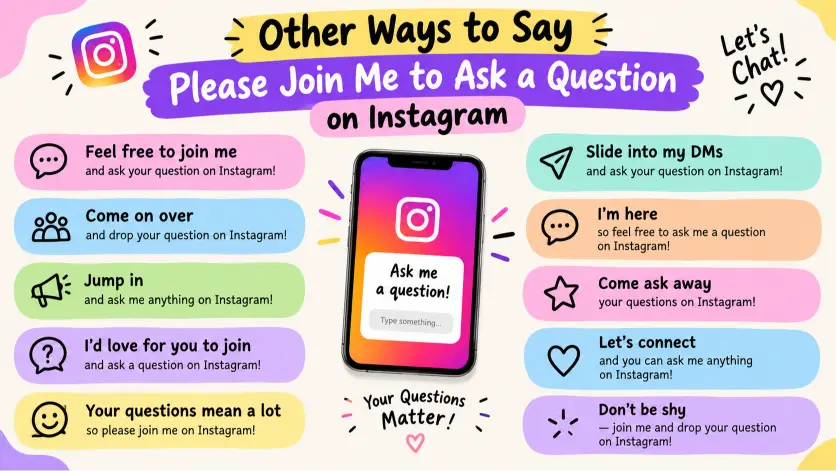
“Please join me” is a simple and polite invitation, but using the same phrase repeatedly can make your English sound predictable. Whether you are inviting a colleague to a meeting, welcoming someone to an event, asking a friend to come along, or encouraging someone to participate, having different expressions can make your communication more natural and engaging. The right alternative also depends on your relationship with the listener and the level of formality required.
In this guide, you’ll discover practical other ways to say please join me, with examples that show how each expression works in real conversations. The phrases are organized by formal, professional, casual, friendly, and warm situations, making it easier to choose the right wording. As an English-learning resource, the focus is on clear usage, natural sentence patterns, and context rather than simply listing synonyms. By learning these alternatives, you can expand your vocabulary and communicate invitations with greater confidence and precision.
Quick Categories
Formal Alternatives to “Please Join Me”
- I would be delighted if you could join me.
- I would like to invite you to join me.
- I warmly invite you to join me.
- I would be pleased to have you join us.
Pro Tip Box
Use formal invitations for ceremonies, official events, written invitations, and situations where respectful wording matters.
Casual Alternatives
- Come along with me.
- Come with me.
- Join me.
- Come and join us.
Pro Tip Box
With friends and familiar people, shorter expressions usually sound more natural than highly formal invitations.
Professional Alternatives
- I’d like to invite you to join us.
- We’d be pleased to have you join us.
- You’re welcome to join us.
- I hope you can join us.
Pro Tip Box
For workplace communication, focus on clarity and courtesy rather than making an invitation unnecessarily elaborate.
Informal Expressions
- Come over and join me.
- Why don’t you join me?
- Come on and join us.
- Want to join me?
Pro Tip Box
Informal expressions work best when speaking with friends, family, classmates, or people you already know well.
Common Mistakes When Using “Please Join Me”
1. Using an overly formal expression with close friends
Mistake: “I would be delighted if you could join me for lunch, buddy.”
Better: “Want to join me for lunch?”
The formal version can sound unnecessarily distant in a close relationship.
2. Forgetting the object or context
Mistake: “Please join.”
Better: “Please join me for dinner.”
Adding the person, activity, or event can make the invitation clearer.
3. Using “join” when “come with” is more natural
Mistake: “Please join me to the supermarket.”
Better: “Please come with me to the supermarket.”
“Join” often emphasizes participation, while “come with” focuses on accompanying someone.
4. Making a casual invitation too formal
Mistake: “I would be honored by your presence at our coffee break.”
Better: “Would you like to join us for coffee?”
Choose wording that matches the situation.
5. Confusing an invitation with an instruction
Mistake: “You must join me for dinner.”
Better: “Would you like to join me for dinner?”
The second version gives the listener a choice and sounds more polite.
What Does “Please Join Me” Mean?
“Please join me” is a polite invitation asking someone to come with you, participate in something, or become part of an activity.
Grammatically, please softens the request, join functions as the main verb, and me identifies the person or group being joined.
Example:
“Please join me for a cup of coffee after the meeting.”
Depending on context, “join me” can mean physically accompanying someone or participating in an activity with them.
When to Use “Please Join Me”
You can use this phrase in many situations, including:
- Inviting someone to dinner
- Asking a colleague to attend a meeting
- Welcoming someone into a conversation
- Inviting friends to an event
- Asking someone to participate in an activity
- Inviting guests to sit with you
- Welcoming someone into a group
- Asking someone to accompany you somewhere
Spoken vs. Written
Spoken:
“Please join me for lunch.”
Written:
“Please join me for our annual team meeting.”
The phrase works in both forms, but written communication may benefit from a little more context.
Formal vs. Informal
Formal:
“I would be delighted if you could join us.”
Informal:
“Want to join me?”
The relationship between the speakers and the setting should guide your choice.
Is “Please Join Me” Professional or Polite to Say?
Polite? ✔ Yes
“Please join me” is generally courteous because please softens the invitation and makes it sound welcoming.
Professional? ❌ No, in most cases
The phrase is understandable in professional settings, but workplace communication may benefit from a more specific invitation that explains the meeting, event, or purpose.
Business-style example:
“I’d like to invite you to join us for Thursday’s project discussion.”
This version gives the recipient useful information while maintaining a professional tone.
“Politeness makes an invitation welcoming; context makes it professional.”
Pros and Cons of Using “Please Join Me”
Pros
- Simple and natural: Easy for most English speakers to understand.
- Friendly tone: Creates a welcoming feeling.
- Common usage: Works across many everyday situations.
- Easy to understand: The intended invitation is immediately clear.
Cons
- Too informal for work: It may lack useful professional context.
- Overused: Repeating it can make your communication sound predictable.
- Limited emotional range: It does not always show enthusiasm or warmth.
- Not suitable for formal writing: More polished alternatives may be preferable for official invitations.
Other Ways to Say “Please Join Me” With Examples
These alternatives will help you sound more fluent, confident, and natural in different situations.
Use them according to tone, context, and audience to express excitement, admiration, or approval.
1. Phrase: Join me
- Meaning: An invitation to accompany or participate with you.
- Explanation: This is the shortest natural version of the original phrase.
- Example Sentence: “Join me for coffee after work.”
- Best Use: Everyday invitations
- Worst Use: Formal announcements
- Tone: Friendly, direct, natural
- Context Variability: Casual: “Join me for lunch.” Professional: “Join me for the presentation.” Spoken: “Join me!”
2. Phrase: Come with me
- Meaning: An invitation to accompany you somewhere.
- Explanation: This focuses more on physically going somewhere together.
- Example Sentence: “Come with me; I want to show you something.”
- Best Use: Everyday situations
- Worst Use: Formal invitations
- Tone: Casual, friendly, direct
- Context Variability: Casual: “Come with me.” Professional: “Could you come with me to the conference room?” Spoken: “Come with me.”
3. Phrase: Come along
- Meaning: An invitation to accompany someone.
- Explanation: It sounds relaxed and conversational.
- Example Sentence: “We’re heading to the café. Come along!”
- Best Use: Casual outings
- Worst Use: Formal letters
- Tone: Relaxed, warm, inviting
- Context Variability: Casual: “Come along with us.” Professional: Less common. Spoken: “Come along!”
4. Phrase: Come and join us
- Meaning: An invitation to become part of a group activity.
- Explanation: This is particularly natural when several people are already together.
- Example Sentence: “We’re having lunch outside. Come and join us.”
- Best Use: Social gatherings
- Worst Use: Formal notices
- Tone: Warm, friendly, welcoming
- Context Variability: Casual: “Come and join us.” Professional: “Come and join us for the discussion.” Spoken: Very natural.
5. Phrase: I’d love you to join me
- Meaning: A warm expression showing that you genuinely want someone to participate.
- Explanation: It adds personal warmth to a simple invitation.
- Example Sentence: “I’d love you to join me for dinner tonight.”
- Best Use: Personal invitations
- Worst Use: Strictly formal notices
- Tone: Warm, sincere, personal
- Context Variability: Casual: “I’d love you to join me.” Professional: Suitable for some relationship-based invitations. Spoken: Natural.
6. Phrase: I’d like to invite you to join me
- Meaning: A polite and professional invitation.
- Explanation: This phrase works well when the invitation needs to sound respectful.
- Example Sentence: “I’d like to invite you to join me for our client presentation.”
- Best Use: Professional invitations
- Worst Use: Very casual chats
- Tone: Polite, professional, respectful
- Context Variability: Casual: Somewhat formal. Professional: Excellent fit. Spoken: Appropriate.
7. Phrase: I hope you can join us
- Meaning: An invitation expressing a desire for someone’s attendance.
- Explanation: It sounds warm without putting pressure on the listener.
- Example Sentence: “I hope you can join us for the celebration.”
- Best Use: Events, gatherings
- Worst Use: Immediate requests
- Tone: Warm, courteous, welcoming
- Context Variability: Casual: “Hope you can join us!” Professional: “I hope you can join us for the meeting.” Written: Very natural.
8. Phrase: You’re welcome to join us
- Meaning: An invitation giving someone permission or encouragement to participate.
- Explanation: It is useful when someone may be unsure whether they are included.
- Example Sentence: “You’re welcome to join us for lunch.”
- Best Use: Open invitations
- Worst Use: Exclusive events
- Tone: Welcoming, polite, inclusive
- Context Variability: Casual: “You’re welcome to join us.” Professional: “You’re welcome to join us for the discussion.” Spoken: Natural.
9. Phrase: Feel free to join me
- Meaning: An invitation that emphasizes freedom of choice.
- Explanation: It makes the invitation sound relaxed and non-demanding.
- Example Sentence: “Feel free to join me if you have time.”
- Best Use: Low-pressure invitations
- Worst Use: Mandatory meetings
- Tone: Relaxed, polite, considerate
- Context Variability: Casual: Very natural. Professional: Appropriate in informal workplace communication. Spoken: Common.
10. Phrase: I’d be happy to have you join me
- Meaning: A polite way to express that someone’s participation would be appreciated.
- Explanation: It communicates warmth while retaining a professional quality.
- Example Sentence: “I’d be happy to have you join me during the presentation.”
- Best Use: Professional settings
- Worst Use: Very casual texts
- Tone: Courteous, warm, professional
- Context Variability: Casual: Slightly formal. Professional: Strong fit. Spoken: Appropriate.
11. Phrase: I’d be delighted if you could join me
- Meaning: A highly courteous invitation showing enthusiasm.
- Explanation: It is suitable when you want the invitation to feel especially respectful.
- Example Sentence: “I’d be delighted if you could join me for the award ceremony.”
- Best Use: Formal events
- Worst Use: Casual errands
- Tone: Formal, warm, enthusiastic
- Context Variability: Casual: Too formal. Professional: Suitable for special occasions. Written: Excellent.
12. Phrase: I’d be pleased to have you join us
- Meaning: A formal expression inviting someone’s attendance.
- Explanation: It communicates respect and welcome.
- Example Sentence: “We’d be pleased to have you join us for the annual conference.”
- Best Use: Formal invitations
- Worst Use: Casual conversations
- Tone: Formal, courteous, welcoming
- Context Variability: Casual: Too formal. Professional: Strong fit. Written: Excellent.
13. Phrase: We’d love to have you with us
- Meaning: A warm invitation to participate in an event or gathering.
- Explanation: It emphasizes that the person’s presence would be appreciated.
- Example Sentence: “We’d love to have you with us at the graduation dinner.”
- Best Use: Social events
- Worst Use: Formal directives
- Tone: Warm, friendly, sincere
- Context Variability: Casual: Excellent. Professional: Suitable for social workplace events. Spoken: Natural.
14. Phrase: I’d like you to join us
- Meaning: A direct invitation to become part of a group.
- Explanation: It is clearer and slightly more purposeful than a general invitation.
- Example Sentence: “I’d like you to join us for the planning session.”
- Best Use: Group activities
- Worst Use: Highly formal events
- Tone: Direct, polite, purposeful
- Context Variability: Casual: Natural. Professional: Very useful. Spoken: Common.
15. Phrase: Would you like to join me?
- Meaning: A polite question inviting someone to participate.
- Explanation: It gives the listener a clear choice.
- Example Sentence: “Would you like to join me for lunch?”
- Best Use: Polite invitations
- Worst Use: Mandatory events
- Tone: Polite, friendly, considerate
- Context Variability: Casual: Excellent. Professional: Appropriate. Spoken: Very natural.
16. Phrase: Would you care to join me?
- Meaning: A refined way to ask someone to accompany you.
- Explanation: This expression sounds more formal and is less common in everyday conversation.
- Example Sentence: “Would you care to join me for dinner?”
- Best Use: Refined invitations
- Worst Use: Casual texting
- Tone: Formal, elegant, courteous
- Context Variability: Casual: Unusual. Professional: Possible. Spoken: Formal.
17. Phrase: Why don’t you join me?
- Meaning: A friendly suggestion that someone participate.
- Explanation: It sounds conversational and encouraging.
- Example Sentence: “Why don’t you join me for a quick coffee?”
- Best Use: Friendly suggestions
- Worst Use: Formal invitations
- Tone: Casual, encouraging, friendly
- Context Variability: Casual: Excellent. Professional: Use selectively. Spoken: Very natural.
18. Phrase: How about joining me?
- Meaning: A casual way to suggest participation.
- Explanation: It presents the invitation as a friendly idea rather than a formal request.
- Example Sentence: “How about joining me for lunch?”
- Best Use: Casual plans
- Worst Use: Formal letters
- Tone: Relaxed, friendly, conversational
- Context Variability: Casual: Excellent. Professional: Informal. Spoken: Natural.
19. Phrase: Would you like to come along?
- Meaning: A polite invitation to accompany someone.
- Explanation: “Come along” gives the invitation a relaxed social feel.
- Example Sentence: “We’re going to the museum. Would you like to come along?”
- Best Use: Social outings
- Worst Use: Formal ceremonies
- Tone: Friendly, polite, relaxed
- Context Variability: Casual: Excellent. Professional: Limited. Spoken: Very natural.
20. Phrase: Come over and join me
- Meaning: An invitation to come to your location and participate.
- Explanation: It is especially useful for informal social situations.
- Example Sentence: “Come over and join me for a cup of tea.”
- Best Use: Informal gatherings
- Worst Use: Business events
- Tone: Casual, warm, welcoming
- Context Variability: Casual: Excellent. Professional: Not recommended. Spoken: Natural.
21. Phrase: You should join us
- Meaning: An encouraging invitation suggesting that participation would be enjoyable.
- Explanation: It can sound enthusiastic but slightly more assertive.
- Example Sentence: “You should join us for dinner tonight.”
- Best Use: Friendly invitations
- Worst Use: Sensitive requests
- Tone: Friendly, enthusiastic, encouraging
- Context Variability: Casual: Excellent. Professional: Use carefully. Spoken: Natural.
22. Phrase: We’d be happy to have you join us
- Meaning: A courteous invitation expressing appreciation for someone’s participation.
- Explanation: It works well for professional and organized gatherings.
- Example Sentence: “We’d be happy to have you join us for the team discussion.”
- Best Use: Workplace invitations
- Worst Use: Casual texts
- Tone: Professional, courteous, welcoming
- Context Variability: Casual: Slightly formal. Professional: Excellent. Written: Strong fit.
23. Phrase: I invite you to join us
- Meaning: A direct and formal invitation.
- Explanation: It is appropriate when the speaker wants to clearly announce an invitation.
- Example Sentence: “I invite you to join us for the opening ceremony.”
- Best Use: Formal occasions
- Worst Use: Casual errands
- Tone: Formal, direct, respectful
- Context Variability: Casual: Too formal. Professional: Appropriate. Written: Excellent.
24. Phrase: We welcome you to join us
- Meaning: A warm invitation emphasizing inclusion.
- Explanation: It works especially well for groups, organizations, events, and communities.
- Example Sentence: “We welcome you to join us for our monthly discussion.”
- Best Use: Group invitations
- Worst Use: Private meetings
- Tone: Welcoming, formal, inclusive
- Context Variability: Casual: Possible. Professional: Excellent. Written: Very suitable.
25. Phrase: Please come and be part of it
- Meaning: An invitation to participate in an event or activity.
- Explanation: This expression emphasizes involvement rather than simply accompanying someone.
- Example Sentence: “Please come and be part of our celebration.”
- Best Use: Celebrations, events
- Worst Use: Business instructions
- Tone: Warm, inclusive, enthusiastic
- Context Variability: Casual: Natural. Professional: Event-specific. Spoken: Warm.
26. Phrase: I’d be glad to have you with me
- Meaning: A friendly expression showing appreciation for someone’s presence.
- Explanation: It combines politeness with personal warmth.
- Example Sentence: “I’d be glad to have you with me during the presentation.”
- Best Use: Personal invitations
- Worst Use: Strict instructions
- Tone: Warm, polite, sincere
- Context Variability: Casual: Natural. Professional: Suitable in some contexts. Spoken: Natural.
27. Phrase: Let’s have you join us
- Meaning: An invitation encouraging someone to become part of a group or activity.
- Explanation: It is more conversational and context-dependent than a standard invitation.
- Example Sentence: “Let’s have you join us for the next part of the discussion.”
- Best Use: Guided participation
- Worst Use: Formal invitations
- Tone: Conversational, encouraging, direct
- Context Variability: Casual: Natural. Professional: Context-dependent. Spoken: More common.
28. Phrase: We’d be delighted to welcome you
- Meaning: A formal expression showing that someone’s attendance would be appreciated.
- Explanation: It is especially useful for ceremonies, conferences, and organized events.
- Example Sentence: “We’d be delighted to welcome you to our annual conference.”
- Best Use: Formal events
- Worst Use: Casual plans
- Tone: Formal, warm, welcoming
- Context Variability: Casual: Too formal. Professional: Excellent. Written: Excellent.
29. Phrase: I hope you’ll come and join us
- Meaning: A warm invitation expressing hope that someone attends.
- Explanation: It sounds friendly and gives the invitation an enthusiastic quality.
- Example Sentence: “I hope you’ll come and join us for dinner.”
- Best Use: Social gatherings
- Worst Use: Mandatory meetings
- Tone: Warm, hopeful, friendly
- Context Variability: Casual: Excellent. Professional: Suitable for social events. Spoken: Natural.
30. Phrase: We’d love for you to join us
- Meaning: A warm and enthusiastic invitation to participate.
- Explanation: It clearly communicates that someone’s presence would be appreciated.
- Example Sentence: “We’d love for you to join us at the celebration.”
- Best Use: Warm invitations
- Worst Use: Formal directives
- Tone: Warm, enthusiastic, welcoming
- Context Variability: Casual: Excellent. Professional: Suitable for appropriate events. Spoken: Very natural.
“Choose an invitation based on your relationship with the listener, not simply on the words you know.”
How to Choose the Right Alternative
The best alternative depends on three factors: relationship, setting, and purpose.
For Friends
Choose:
- Come with me
- Come along
- Want to join me?
- Why don’t you join me?
- How about joining me?
These are natural informal expressions in English.
For Colleagues
Choose:
- I’d like to invite you to join us.
- I hope you can join us.
- You’re welcome to join us.
- We’d be happy to have you join us.
These expressions balance politeness and professionalism.
For Formal Events
Choose:
- I would like to invite you to join me.
- I’d be delighted if you could join me.
- I invite you to join us.
- We’d be delighted to welcome you.
For Warm Personal Invitations
Choose:
- I’d love you to join me.
- We’d love to have you with us.
- I’d be glad to have you with me.
- We’d love for you to join us.
Professional Reaction Phrases for Invitations
Sometimes you are not making the invitation yourself. You may need a professional response.
Here are useful professional reaction phrases:
- “Thank you for the invitation.”
- “I’d be pleased to join you.”
- “I’d be happy to attend.”
- “Thank you. I’d be glad to participate.”
- “I appreciate the invitation.”
- “I look forward to joining you.”
- “I’d be delighted to attend.”
These responses help you acknowledge an invitation without sounding too casual.
See Also
See also: Other Ways to Say Nice to Meet You Too for more natural responses in social and professional introductions.
See also: Professional English Guide: Polite Phrases for Workplace Communication for additional expressions that can make workplace conversations clearer and more respectful.
Mini Quiz: Test Your English
1. You are inviting a colleague to a project meeting. Which sounds most professional?
A. Wanna come?
B. Come along!
C. I’d like to invite you to join us.
D. Come over.
Answer: C
2. You are inviting a close friend to lunch. Which sounds most natural?
A. I invite you to join me.
B. Would you like to join me for lunch?
C. I would be delighted if you could join me.
D. We welcome you to join us.
Answer: B
3. Which phrase gives the listener the greatest sense of choice?
A. You must join me.
B. You should join me.
C. Feel free to join me.
D. Join me now.
Answer: C
4. Which phrase is especially suitable for a formal event?
A. Wanna join us?
B. Come with me.
C. I’d be delighted if you could join me.
D. Come over.
Answer: C
Comparison Table: Top Alternatives
| Phrase | Tone | Best Use |
| Join me | Direct, friendly | Everyday invitations |
| Come with me | Casual, natural | Accompanying someone |
| I’d love you to join me | Warm, sincere | Personal invitations |
| I’d like to invite you to join me | Professional, polite | Workplace settings |
| I hope you can join us | Warm, courteous | Events and gatherings |
| Feel free to join me | Relaxed, polite | Low-pressure invitations |
| Would you like to join me? | Polite, friendly | General invitations |
| I’d be delighted if you could join me | Formal, warm | Special occasions |
| You’re welcome to join us | Welcoming, inclusive | Open invitations |
| We’d love for you to join us | Warm, enthusiastic | Social events |
FAQs
What is another way to say “please join me”?
Common alternatives include “join me,” “come with me,” “would you like to join me?” “I’d love you to join me,” and “I hope you can join us.” The best choice depends on the situation.
What is a professional way to say “please join me”?
For professional communication, try “I’d like to invite you to join us,” “I hope you can join us,” or “We’d be happy to have you join us.”
How do you politely invite someone to join you?
Use a courteous question such as “Would you like to join me?” or a warm invitation such as “I’d love you to join me.”
Is “please join me” formal or informal?
“Please join me” is generally polite and neutral. It can work in both spoken and written English, although more specific alternatives may sound more professional or formal.
What is a casual way to say “please join me”?
Natural casual options include “Come with me,” “Come along,” “Want to join me?” and “Why don’t you join me?”
Conclusion
Learning other ways to say please join me gives you more control over tone, politeness, and context. A short phrase such as “Join me” works naturally with friends, while “I’d like to invite you to join us” can fit a professional environment more effectively. Formal alternatives such as “I’d be delighted if you could join me” are useful for special events and respectful invitations.
The key is to practice choosing expressions based on the audience and situation. Try replacing the same invitation with three different versions each day: one casual, one professional, and one formal. This simple habit can improve fluency, expand your vocabulary, and help you communicate with greater confidence.









